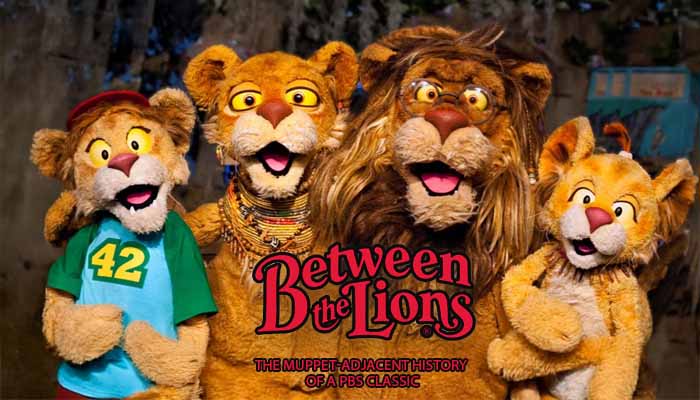

If you grew up in the early 2000s, the phrase “Get Wild About Reading!” likely triggers a rush of nostalgia. While many viewers fondly remember the library-dwelling family of lions, there is often a lingering question that follows the show into adulthood: Is Between the Lions a Muppet show? While not a direct production of The Jim Henson Company, its creative DNA is inextricably linked to the Muppet world. This deep dive explores the show’s sophisticated history, its connection to Jim Henson’s legacy, and why it remains the gold standard for educational television.
The Muppet Pedigree: Who Built the Lions?
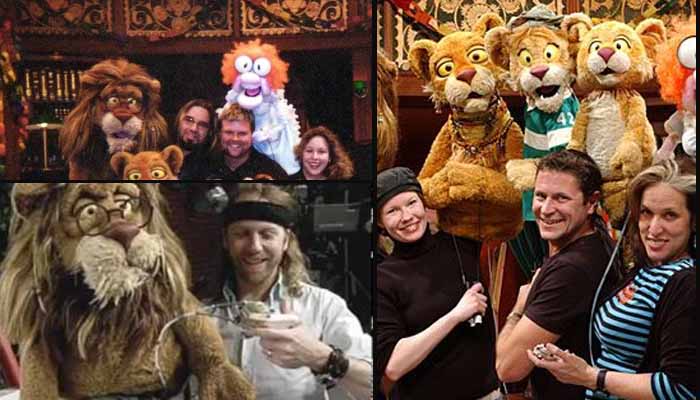
To understand why Between the Lions (BTL) feels like a Muppet production, you have to look at the hands inside the puppets. The series was produced by WGBH Boston, Sirius Thinking, and Mississippi Public Broadcasting, but they turned to the masters of the craft to bring the characters to life.
1. The Jim Henson Creature Shop
The puppets themselves were designed and built by Jim Henson’s Creature Shop. This explains the sophisticated animatronics in the lions’ facial expressions and the high-quality foam-latex builds that allowed for the expressive, “Muppet-style” movement that cheap knock-offs can never quite replicate.
2. The Puppeteers
The show featured a “Who’s Who” of Muppet royalty. Christopher Cerf, a Sesame Street veteran, was a co-creator. The lead characters were performed by legends like:
- Anthony Asbury (Lionel): Famous for his work on Labyrinth and Sesame Street.
- Heather Asch (Leona): A long-time Muppet performer and Emmy winner.
- Peter Linz (Theo): The talented performer who would later bring the Muppet Walter to life in the 2011 Disney film.
The Library Cast: A Family of Readers
The series centered on a family of anthropomorphic lions who ran a magical library where characters literally jumped off the pages of books. This setting allowed the show to explore different genres, from folk tales to scientific manuals.
| Character | Role | Personality |
| Theo & Cleo | The Parents | The wise, book-loving curators of the library. |
| Lionel | The Son | A 7-year-old eager reader who looks up to his parents. |
| Leona | The Daughter | A 4-year-old still learning the ropes of phonics. |
| Barnaby & Buster | The Statues | Two stone gargoyles who provided comic relief and commentary. |
Innovative Curriculum: The “Whole-Part-Whole” Method
Unlike many shows that focus on simple storytelling, Between the Lions was built on a rigorous literacy curriculum. It utilized a “Whole-Part-Whole” approach to help children decode language:
- Whole: Introduce a story (e.g., a classic folk tale or fable) to provide context.
- Part: Break down specific phonics, vowels, or “blends” found within that story.
- Whole: Re-contextualize those sounds back into the reading experience to build fluency.
Iconic Segments and Sketches
The show used recurring sketches to keep children engaged, utilizing the same variety-show format popularized by The Muppet Show.
Gawain’s Word
A parody of Wayne’s World, this segment featured two knights representing different letter sounds. When they charged at each other, they would “blend” to form a word (e.g., “sh” and “op” becoming “shop”).
Cliff Hanger
A fan-favorite recurring cartoon about a man hanging from a cliff. His survival always depended on his ability to read the instructions in his “Survival Handbook,” though he rarely succeeded, ending every episode with the dry catchphrase: “Can’t… hold… on… much… longer!”
Vowel Boot Camp
A stern drill sergeant would force “recruits” (the vowels) to make their correct sounds, teaching children the difference between long and short vowels through rhythmic repetition.
Conclusion: The Enduring Impact of the Library Lions
Between the Lions wrapped its final season in 2010, but its influence remains a powerhouse in the realm of educational media. Over its ten-season run, the show garnered seven Daytime Emmy Awards and was lauded by educators for its measurable success in teaching children from “at-risk” backgrounds how to read.
Its brilliance lay in its refusal to talk down to its audience. By combining the technical wizardry of the Jim Henson Creature Shop with a rock-solid pedagogical foundation, it proved that learning to read didn’t have to be a chore—it could be an adventure. While the library doors may be closed for new episodes, the show’s legacy lives on in the millions of children who learned that “the library is the place where the world is at your fingertips.” It remains a masterclass in how puppetry can be used not just for laughs, but as a transformational tool for literacy.