
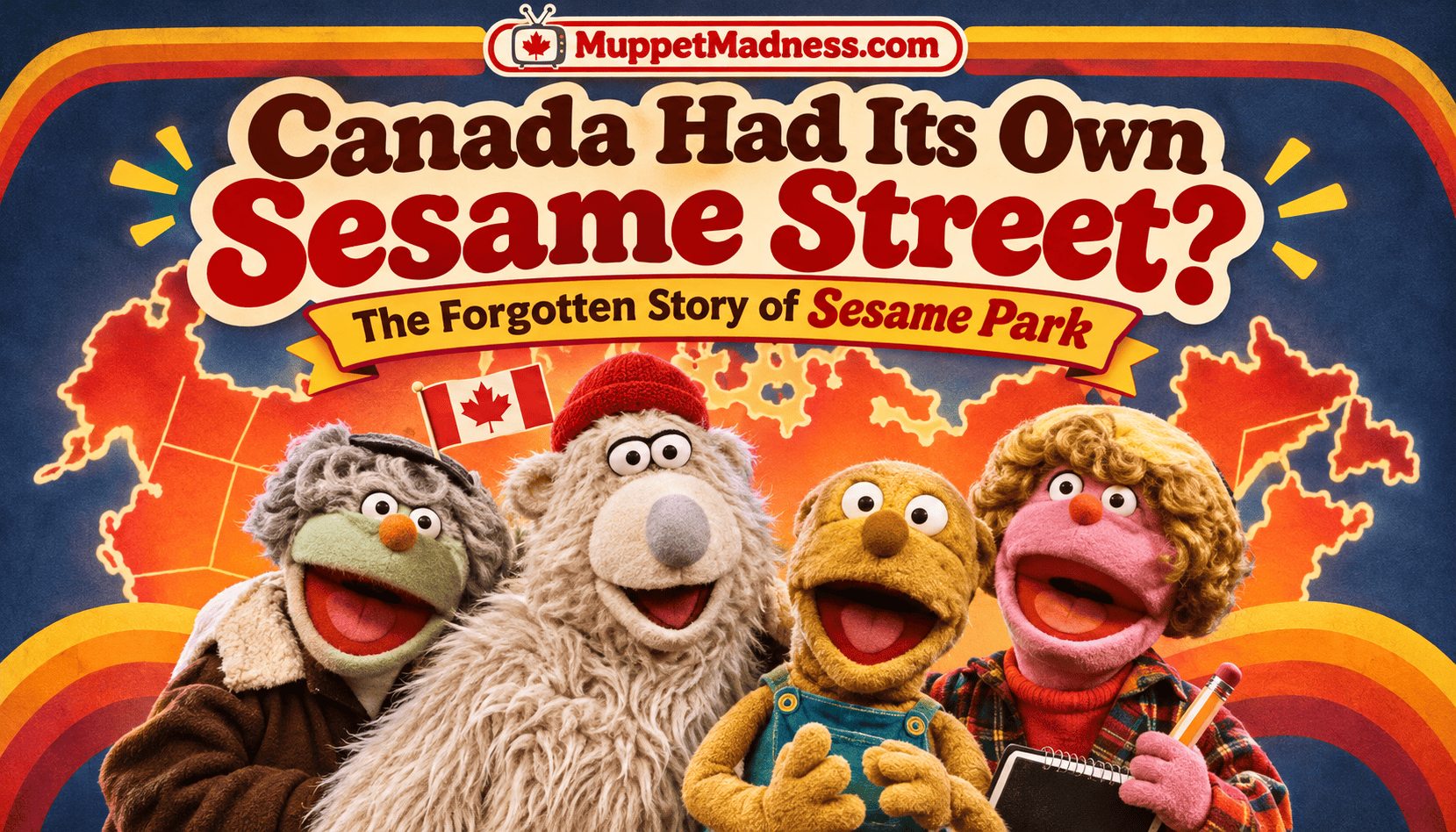

Did You Know Sesame Street Had a Canadian Version? The Forgotten Story of Sesame Park
If you grew up watching Sesame Street in Canada during the 1970s, 1980s, or 1990s, here’s something you might not have realized: you weren’t always watching the same Sesame Street as American kids!
Most of us remember Big Bird, Bert and Ernie, Cookie Monster, Oscar the Grouch, and the Count. They were part of our childhoods, teaching us letters, numbers, friendship, and occasionally how to annoy your roommate with a rubber duckie.
But while American children were learning their ABCs, Canadian children were getting something a little different.
We had French lessons instead of some Spanish lessons. We learned to pronounce the last letter of the alphabet as “zed” instead of “zee.” We even had our very own Muppets!
Eventually, Canada went one step further and created a distinctly Canadian version of the beloved children’s program called Sesame Park.
And if the names Basil, Louis, Dodi, or Chaos mean anything to you, congratulations. You’ve just unlocked a seriously nostalgic childhood memory.
How Sesame Street Became Canadian
When Sesame Street premiered in the United States on November 10, 1969, it quickly became one of the most influential children’s television programs ever created.
Canadian broadcasters wanted in on the fun, and CBC began airing Sesame Street in 1970.
But there was a problem.
Canada had its own broadcasting regulations designed to encourage Canadian programming. As those Canadian content requirements developed, the American-produced Sesame Street became a subject of debate.
Some Canadian television stations even threatened to stop broadcasting it.
And Canadian parents weren’t having it.
In September 1972, children and parents protested outside a television station in Kingston, Ontario, demanding that their favourite educational program return.
Imagine being a preschooler and taking to the streets to defend Bert and Ernie!
Fortunately, CBC found a solution.
Rather than simply rebroadcasting the American program unchanged, Canadian producers began incorporating original Canadian educational segments.
By the early 1970s, a Canadian version of Sesame Street was taking shape.
And that was only the beginning.
The Canadian Sesame Street Was Different in Some Surprising Ways
For years, Canadian children watched a fascinating mixture of original American Sesame Street material and segments created specifically for Canadian audiences.
The differences weren’t always obvious, but they were there.
Goodbye, Zee. Hello, Zed!
One of the most amusing differences was the alphabet.
American Sesame Street taught children that the last letter was pronounced “zee.”
But in Canada, it was “zed.”
Canadian producers sometimes removed or re-dubbed alphabet segments to reflect Canadian pronunciation.
Even the ABCs needed a little Canadian makeover!
French Instead of Spanish
The American Sesame Street regularly introduced children to Spanish words and phrases.
For CBC’s version, many of those segments were replaced with French-language lessons.
This reflected Canada’s two official languages and encouraged English-speaking children to become familiar with French.
Suddenly, Canadian children were learning words like “bonjour” and “merci” alongside their numbers and letters.
A Little More Canada on Television
Canadian-produced segments introduced children to familiar places, people, communities, and traditions from across the country.
There were opportunities to learn about Canadian geography, history, multiculturalism, and life in different regions.
Children also encountered stories highlighting First Nations and Inuit communities.
Canadian entertainers such as Raffi and Fred Penner were among the performers featured.
The goal wasn’t to replace everything that made Sesame Street special. It was to make the show feel a little more like home.
And eventually, that meant introducing some brand-new Muppets.
Meet the Forgotten Canadian Sesame Street Muppets
Here’s where things get really interesting for longtime Muppet fans.
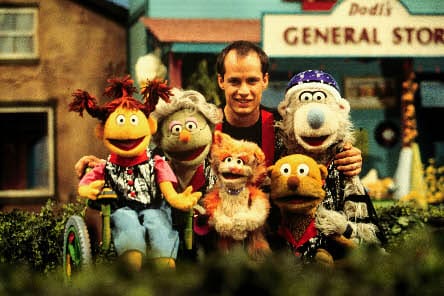
In February 1987, three original Canadian Muppet characters arrived on Sesame Street: Basil, Louis, and Dodi.
These characters were designed by Jim Henson and created to help Canadian children explore language, culture, and the country around them.
They weren’t simply Canadian copies of Big Bird or Oscar.
They had their own personalities, friendships, and adventures.
Basil the Polar Bear
Basil was an English-speaking polar bear with a friendly personality and a willingness to learn.
He was also learning French, which made him a natural fit for the show’s bilingual educational lessons.
Alongside his friend Louis, Basil helped introduce children to new words and ideas.
For many Canadian kids, Basil became one of the most recognizable faces of the homegrown Sesame Street segments.
And seriously, how much more Canadian could you get than having a polar bear teach children French?
Louis the Otter
Louis was a bilingual, French-Canadian otter who helped Basil learn French.
Their interactions allowed the program to explore bilingualism through friendship and humour rather than making language lessons feel like homework.
Louis brought something different to the familiar Sesame Street formula.
He helped show that speaking more than one language could be a natural, everyday part of Canadian life.
Dodi the Bush Pilot
Now here’s a character that deserves a lot more attention.
Dodi wasn’t just another colourful puppet hanging around the neighbourhood.
She was a grey-haired bush pilot!
That’s right. Canada had a Sesame Street Muppet who flew an airplane.
Dodi’s adventures helped introduce young viewers to different Canadian locations, landmarks, and communities.
Her segments could take children from familiar city sights to places elsewhere across Canada’s enormous landscape.
And let’s face it: a Muppet flying around Canada in a little plane is a pretty fantastic concept.
Who else remembers Dodi?
If you watched Sesame Street on CBC during the late 1980s or early 1990s, there’s a good chance you’ve seen her without realizing she was exclusive to the Canadian production.
Katie: A Muppet Who Used a Wheelchair
Another memorable Canadian character was Katie, a young Muppet who used a wheelchair.
Katie brought disability representation into the cast and helped reinforce the idea that children with different abilities belonged in the same welcoming community.
She would later appear in Sesame Park alongside the other Canadian characters.
Chaos the Cat
When the show evolved into Sesame Park, the cast expanded to include Chaos, an energetic orange cat.
With a name like Chaos, you can probably guess that this character wasn’t exactly the quietest member of the group.
Chaos helped bring additional playful energy to the new Canadian program.
And yes, we’re fairly certain a character named Chaos would fit right in here at Muppet Madness.
In 1996, Canadian Sesame Street Became Sesame Park
After more than two decades of adapting the American program for Canadian audiences, CBC decided to take a bigger step.
On October 21, 1996, Sesame Park officially premiered.
Instead of presenting the familiar American Sesame Street with Canadian material inserted throughout, the new show placed Canada’s own Muppets at the centre of the action.
The program was reduced to a half-hour format and featured a distinctly Canadian setting.
The familiar New York-style street gave way to a neighbourhood park.
Basil, Louis, Dodi, Katie, and Chaos became the main attractions, joined by a human character named Ray.
The show continued using French and English educational segments, along with some material featuring familiar American Sesame Street characters.
But the emphasis had changed.
This wasn’t simply Sesame Street with a Canadian twist anymore.
It was an opportunity for Canada’s own Muppets to lead the show.
Whatever Happened to Sesame Park?
Unfortunately, Sesame Park didn’t enjoy the decades-long success of its American counterpart.
The Canadian series ran on CBC from October 1996 until 2001.
By then, children’s television was changing, and audiences had more viewing choices than ever before.
The original American Sesame Street remained familiar to Canadian families, but Sesame Park eventually disappeared from the television schedule.
Basil, Louis, Dodi, Katie, and Chaos never achieved the worldwide fame of Big Bird, Elmo, or Cookie Monster.
For many viewers, they slowly became distant childhood memories.
And for younger Muppet fans, these characters may be completely unfamiliar.
That’s a shame, because Canada’s Sesame Street experiment was genuinely fascinating.
It demonstrated how Jim Henson’s characters and educational philosophy could be adapted to reflect another country’s culture without losing the humour and warmth that made Sesame Street so beloved.
Why Canada’s Sesame Street Deserves to Be Remembered
The story of Canadian Sesame Street is more than a forgotten chapter in children’s television history.
It’s a reminder of how television once connected children to the world around them.
A generation of Canadian kids learned their ABCs from familiar Muppets while also discovering French words, Canadian geography, regional communities, and the importance of friendship.
Some of those lessons came from Big Bird and Ernie.
Others came from a bilingual otter, a friendly polar bear, and a bush pilot with an airplane.
And that’s pretty wonderful when you think about it.
The Canadian version also gave performers, writers, animators, and television producers an opportunity to contribute their talents to one of the world’s most famous children’s programs.
While Sesame Park itself is gone, its characters remain part of the broader Jim Henson and Sesame Street legacy.
In October 2026, Sesame Park marked the 30th anniversary of its original premiere.
That’s three decades since Basil, Louis, Dodi, and their friends stepped into the spotlight with their own Canadian show.
Perhaps it’s time these forgotten Muppets received a little more recognition.
Do You Remember Canada’s Sesame Street?
Now we want to hear from you!
Did you grow up watching Sesame Street on CBC?
Do you remember Basil the Polar Bear, Louis the Otter, Dodi the Bush Pilot, Katie, or Chaos the Cat?
Or did you watch Sesame Park during the late 1990s?
Maybe you remember learning to say “zed” instead of “zee” without ever realizing American children were watching something different.
Tell us in the comments: Which Canadian Sesame Street character do YOU remember most?
And if you know someone who grew up watching CBC children’s television, share this article with them.
You might just unlock a childhood memory they haven’t thought about in 30 years!
Because here at Muppet Madness, we believe even the most forgotten Muppets deserve their moment in the spotlight.
Frequently Asked Questions About Canadian Sesame Street
Did Canada really have its own Sesame Street?
Yes. CBC began airing Sesame Street in 1970 and developed a Canadian adaptation featuring locally produced educational material. In 1996, it evolved into a separate half-hour program called Sesame Park.
What was the Canadian version of Sesame Street called?
The earlier adapted program was commonly known as Canadian Sesame Street or Sesame Street Canada. In 1996, the CBC launched Sesame Park, featuring original Canadian Muppet characters.
Who were the Canadian Sesame Street Muppets?
Some of the most recognizable characters were Basil the Polar Bear, Louis the Otter, Dodi the Bush Pilot, Katie, and Chaos the Cat.
When did Sesame Park end?
Sesame Park aired on CBC from October 1996 until 2001.
Was Jim Henson involved with Canadian Sesame Street?
Yes. Jim Henson designed Basil, Louis, and Dodi, the three original Canadian Muppet characters introduced in 1987.


Join the conversation
Have a memory, a question, or a favorite moment? Share it with fellow fans.