Long before modern internet culture mastered the art of self-aware celebrity cameos and deadpan internet sketches, one television show was already rewriting the rulebook. When The Muppet Show debuted in syndication in 1976, Jim Henson didn’t just create a revolutionary variety show—he fundamentally reinvented how Hollywood stars interacted with their public.
Instead of treating high-profile actors, musicians, and comedians with traditional talk-show reverence, Henson and his team of puppeteers did something radical: they made the biggest stars in the world look utterly ridiculous by sticking them on a chaotic vaudeville stage next to a sarcastic green frog, a chaotic drumming monster, and a heckling pair of old men in a balcony.
The Late-Night Playbook Before the Muppets
In the 1970s, television guest spots followed a rigid, predictable script. Whether it was The Tonight Show Starring Johnny Carson or traditional variety hours hosted by legends like Carol Burnett or Dean Martin, celebrity appearances were built around validation and promotion. Guests walked out to polite applause, sat down on a plush couch, exchanged rehearsed banter with the host, plugged their latest movie, album, or book, and perhaps participated in a safe, mildly humorous sketch.
It was a closed loop of mutual PR. The celebrity looked polished, sophisticated, and untouchable.
Jim Henson took that polished loop, threw it out the back door of the Muppet Theater, and let Animal chew on the remains.
Flipping the Power Dynamic
The true genius of The Muppet Show’s guest star formula was vulnerability through absurdity. When actors like Mark Hamill, Rita Moreno, Steve Martin, or Vincent Price stepped onto the Muppet stage, they instantly lost the upper hand.
1. Stripping Away Hollywood Armor
In a standard interview, a celebrity controls the narrative. On The Muppet Show, the environment was aggressively uncooperative. A star could be in the middle of a serious theatrical monologue only for Fozzie Bear to drop a terrible rimshot behind a curtain, or for Gonzo to try and launch a bowling ball into a tuba.
2. Equal Opportunity Chaos
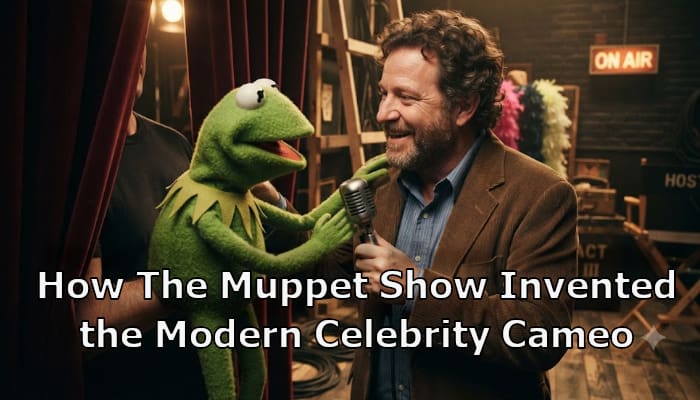
Muppets do not care about box office numbers, Oscar nominations, or personal branding. When a legendary dramatic actor or pop icon stood next to Kermit the Frog—a felt amphibian visibly operated by a human crouching just out of frame—the visual hierarchy completely inverted. Dignity was replaced by slapstick, and ego was systematically dismantled by pure, unadulterated joy.
The Blueprint for the Modern Internet Cameo
Look closely at today’s digital landscape—from high-profile actors doing absurd things on Hot Ones to A-listers playing unhinged versions of themselves in short-form internet sketches and streaming cameos. That entire ethos was forged on the soundstages of The Muppet Show.
Henson proved that audiences didn’t want to see celebrities being untouchable; they wanted to see them play along.
- The Willing Participant: The best Muppet Show guests were the ones who leaned entirely into the madness. When Mark Hamill appeared in 1980, he didn’t just promote The Empire Strikes Back; he enthusiastically played along with Luke Skywalker’s eccentric space-pirate cousin, Mark Hamill, and got pulled into a sci-fi musical number alongside a chorus of singing vegetables.
- The Weaponized Deadpan: Kermit’s exhausted, unflappable management style created a blueprint for the modern straight-man comedic dynamic. He treated international megastars with the exact same mild exasperation he reserved for a chaotic rat named Rizzo or a hyperactive bear.
Why the Legacy Endures
By forcing Hollywood’s elite to share screen space with chaotic monsters, sarcastic hecklers, and enthusiastic pigs, The Muppet Show humanized them. It taught pop culture a vital lesson that still rings true today: the best way for a celebrity to win over an audience is to stop taking themselves so seriously.
Jim Henson didn’t just revolutionize puppetry—he invented the modern art of self-deprecation. And television has never looked the same since.