
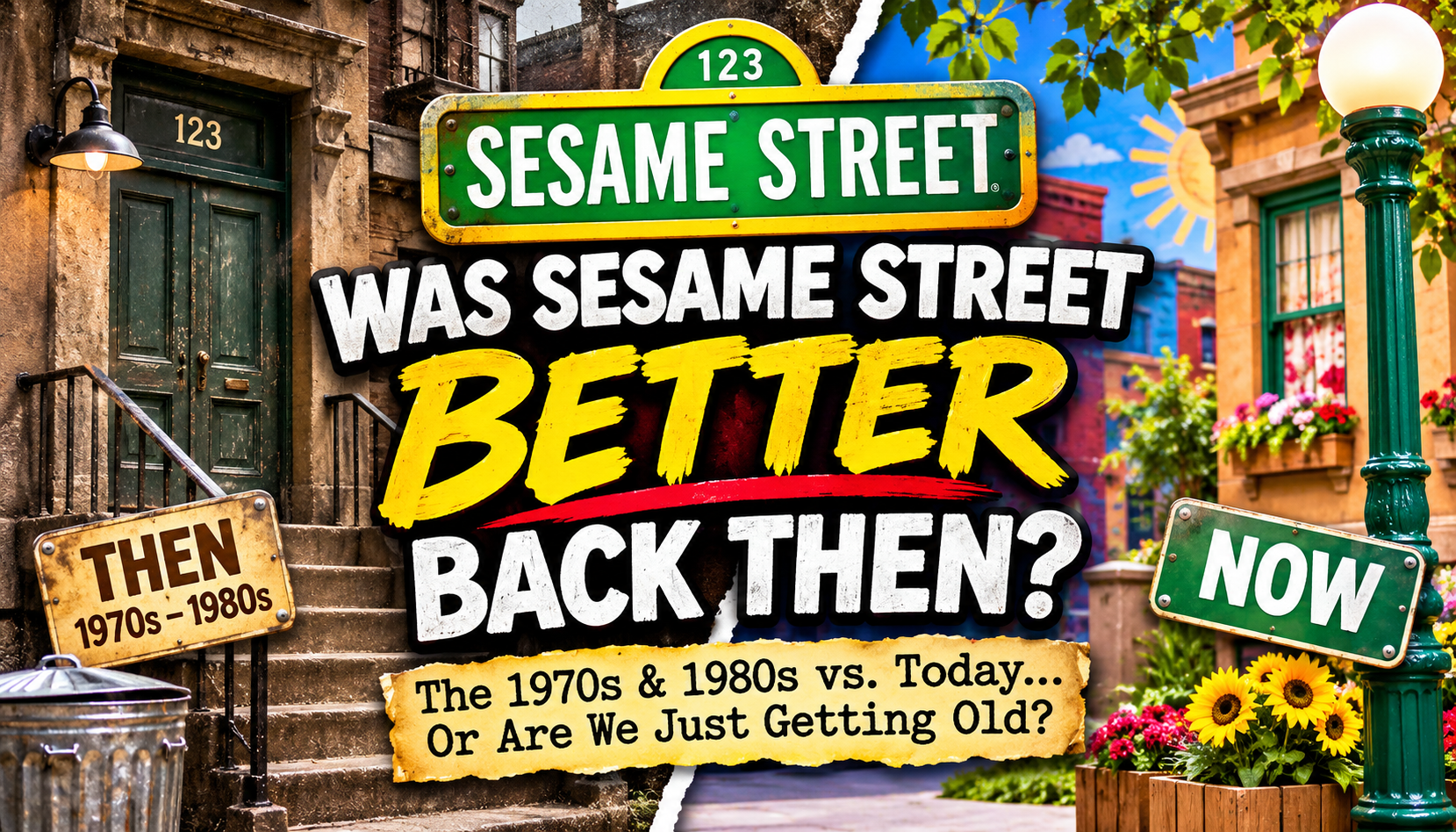

Was Sesame Street Better in the 1970s and 1980s, or Are We Just Getting Old?
Let’s settle something, once and for all. Was Sesame Street actually better when we were kids, or are we just a bunch of aging Muppet fans who can’t accept that the world has moved on?
If you grew up watching Sesame Street in the 1970s or 1980s, chances are you remember a very different neighbourhood from the one children visit today.
There was something about that old street. The slightly worn-down buildings, the familiar faces sitting on the steps, the strange little films, and those wonderfully weird Muppet sketches that sometimes made absolutely no sense.
You had Big Bird wandering around asking questions, Oscar yelling from his trash can, Cookie Monster destroying everything edible, and Bert somehow managing to put up with Ernie’s nonsense for another day.
And don’t even get us started on those old animated counting segments.
But was the original Sesame Street really better?
Or does everything just seem a little more magical when you’re remembering it through the eyes of a five-year-old?
Let’s take a stroll back through the neighbourhood and find out.
The 1970s: When Sesame Street Was a Little Rough Around the Edges
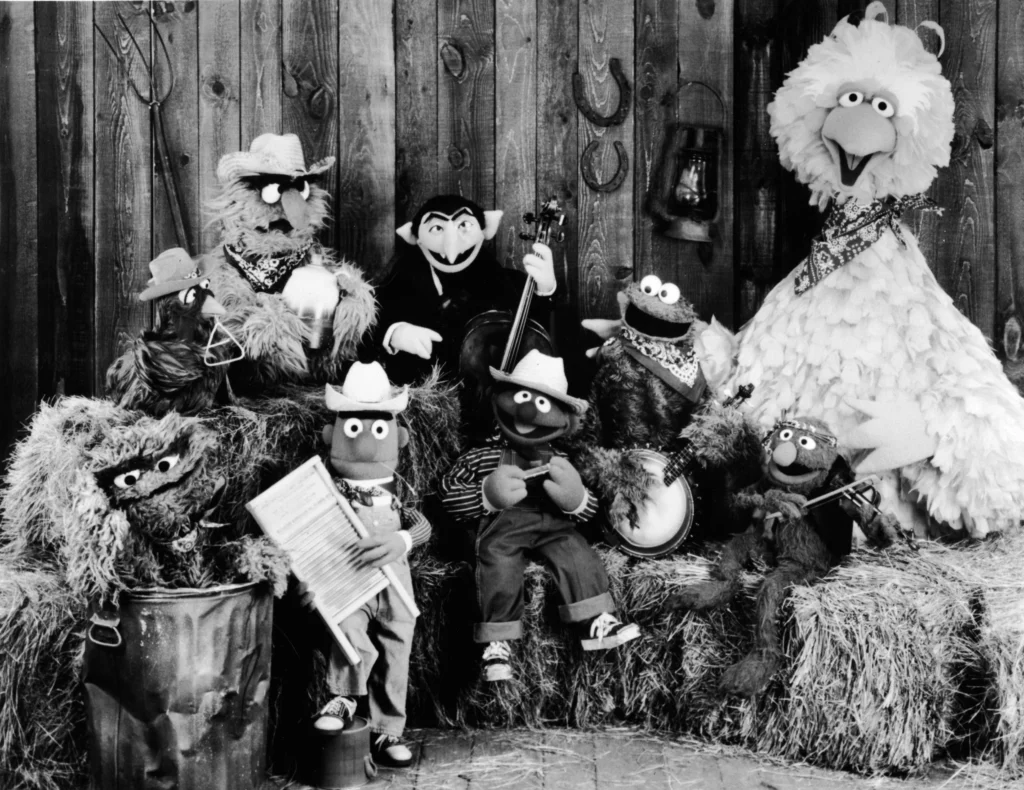
When Sesame Street premiered on November 10, 1969, it wasn’t trying to look like every other children’s television program.
In fact, there really wasn’t anything quite like it.
Created by Joan Ganz Cooney and Lloyd Morrisett, the series combined educational research, television production, music, animation, and Jim Henson’s wonderfully unpredictable Muppets.
But one of its most distinctive features was the neighbourhood itself.
The original Sesame Street wasn’t a spotless, brightly coloured fantasy world.
It looked like an actual city street.
There were worn brick buildings, garbage cans, storefronts, apartment steps, and people who looked like they might genuinely live around the corner.
And somehow, a giant yellow bird wandering through the middle of it all seemed perfectly normal.
That was part of the magic. Sesame Street felt like a real neighbourhood, not simply a television set.
You had Gordon, Susan, Bob, Mr. Hooper, and later familiar faces like Maria and Luis.
They weren’t just adults standing around introducing educational segments. They were neighbours. They talked to each other, helped each other, occasionally disagreed, and treated the Muppets like regular members of the community.
The show taught children about letters and numbers, but it also introduced them to the idea of living alongside people who weren’t necessarily like themselves.
And it managed to do that without making every moment feel like a lesson.
The Muppets Were Just Plain Weird — And We Loved Them for It
Here’s something that longtime fans might appreciate.
Those early Sesame Street Muppets were sometimes downright bizarre.
Sure, we had the familiar characters. But mixed in with them were creations like Herry Monster, Sherlock Hemlock, Roosevelt Franklin, and all sorts of strange creatures that might appear for a sketch and disappear again.
Remember the Yip Yip Martians trying to figure out everyday human objects?
Or Grover trying to survive another disastrous encounter with Mr. Johnson?
How about Guy Smiley, whose enthusiasm for hosting game shows was enough to make you wonder whether the man ever slept?
And then there were the sketches that felt like Jim Henson and his crew had simply been allowed to have fun.
Some were silly. Some were surreal. Some were genuinely hilarious.
A few were even a little unsettling.
The original Sesame Street wasn’t afraid to be strange.
And perhaps that’s one of the biggest things longtime fans miss.
Not every sketch needed a tidy little explanation. Sometimes the joke was simply that a ridiculous blue monster was doing something ridiculous.
And that was enough.
Those Classic Sesame Street Songs Still Live Rent-Free in Our Heads
If you’re old enough to remember the original Sesame Street, there’s a good chance certain songs have been permanently stuck in your head for the last 40 or 50 years.
“Rubber Duckie.”
“C Is for Cookie.”
“I Love Trash.”
“People in Your Neighborhood.”
And, of course, “Sing.”
Then there were the animated segments.
The famous pinball counting sequence. The falling baker carrying his desserts. The colourful little films teaching us numbers, letters, shapes, and everything in between.
And who remembers the wonderfully odd “Ladybugs’ Picnic”?
Many of these segments were short, creative, and instantly recognizable.
They weren’t necessarily flashy by today’s standards, but they were memorable.
You could hear a few notes from one of those old songs today and suddenly find yourself back in front of the television, sitting cross-legged on the floor.
That’s a pretty impressive accomplishment for a children’s program.
The 1980s: Sesame Street Grew Up With Us
By the 1980s, Sesame Street had become a television institution.
The neighbourhood was familiar, the characters had developed stronger personalities, and the show was becoming increasingly comfortable tackling subjects that other children’s programs might avoid.
One of the most important moments came in 1983.
Following the death of actor Will Lee, Sesame Street made the remarkable decision to acknowledge the death of his character, Mr. Hooper.
Rather than inventing a reason for his absence, the writers created an episode in which Big Bird learned that Mr. Hooper had died.
It was heartbreaking.
It was honest.
And for many children, it was one of their first introductions to understanding death and loss.
That moment demonstrated something Sesame Street had understood from the beginning.
Children were capable of understanding more than adults sometimes gave them credit for.
Then, in 1985, another major change occurred.
After years of the adults believing that Mr. Snuffleupagus was simply Big Bird’s imaginary friend, they finally met him.
Big Bird had been telling the truth all along!
These weren’t insignificant moments. They were major developments in a children’s television show that understood the importance of trust, friendship, and difficult emotions.
And somehow, the series still found time for Cookie Monster to demolish a plate of cookies.
That’s balance.
Then Came Elmo — And Everything Started Changing
Before anyone gets upset, let’s make something clear.
We don’t hate Elmo.
Elmo is a fantastic character, and there’s a reason generations of children have fallen in love with the little red monster.
But there’s no denying that his rise to popularity changed Sesame Street.
Elmo began developing into the character audiences know today during the 1980s, eventually becoming one of the biggest stars in children’s entertainment.
By the late 1990s, he was practically everywhere.
In 1998, Sesame Street introduced “Elmo’s World,” a recurring segment built around Elmo exploring familiar subjects through repetition, questions, and imaginative play.
It was specifically designed for younger viewers.
And it worked.
But for fans who grew up with the old neighbourhood, the change was noticeable.
Suddenly, the show felt more structured.
The unpredictable mix of sketches, characters, music, and strange little films was gradually being replaced by more consistent, recognizable formats.
Some longtime characters were appearing less frequently, while newer personalities became the primary focus.
For older fans, it could feel like the Sesame Street they remembered was slowly disappearing.
But here’s the interesting part.
The show wasn’t necessarily changing because the creators had forgotten what made it special.
It was changing because the children watching it were changing, too.
Classic Sesame Street vs. Modern Sesame Street: What’s Really Different?
Compare an episode from the 1970s with one from recent years, and the differences become pretty obvious.
The original show was more of a variety program.
One minute you might be watching Bert and Ernie argue about something completely ridiculous.
The next, you’d see an animated counting film, a song performed by actual children, or a short documentary about how something was made.
Then it was back to the street for another little adventure.
There was a real sense that you never knew what was coming next.
Modern Sesame Street has generally moved toward a more focused, story-driven format.
Episodes became shorter over time, and the show’s 2025 redesign introduced a format centered on an 11-minute character-driven story.
The educational emphasis has also evolved.
While letters, numbers, and early literacy remain important, recent seasons have placed particular attention on kindness, emotional well-being, friendship, and helping children manage difficult feelings.
There are still jokes, music, familiar Muppets, and plenty of educational moments.
But the presentation is different.
Old Sesame Street felt like dropping in on a neighbourhood. Modern Sesame Street often feels like following a carefully planned adventure.
Neither approach is automatically wrong.
But they certainly create different viewing experiences.
Did the Old Sesame Street Have More Personality?
This might be where things get a little controversial.
One argument longtime fans often make is that the older version had more personality.
The characters felt slightly less polished.
Oscar was genuinely grouchy.
Grover could be spectacularly incompetent.
Bert was constantly being driven up the wall by Ernie.
And some of those early Muppet creatures looked like they had been assembled out of whatever Jim Henson happened to find lying around the workshop.
There was an unpredictable charm to all of it.
Today’s productions are cleaner, more colourful, and technically more sophisticated.
But does that automatically make them more entertaining?
Not necessarily.
There’s something to be said for a little imperfection.
Sometimes a slightly scruffy puppet, a wonderfully awkward joke, or a strange piece of animation can leave a bigger impression than the slickest modern production.
Then again, perhaps we’re overlooking something important.
We weren’t analyzing production quality when we were five years old.
We were just watching monsters sing about cookies.
Are We Remembering Sesame Street, or Are We Remembering Our Childhood?
Here’s where we have to be fair.
Nostalgia is a powerful thing.
When we remember watching Sesame Street in the 1970s or 1980s, we’re not just remembering a television program.
We’re remembering a time in our lives.
Maybe it was watching the show before heading off to kindergarten.
Maybe it was sitting in the living room with a bowl of cereal.
Or maybe it was being home sick from school and realizing that Big Bird and Grover were going to keep you company for the morning.
Those memories become attached to the show.
And when we revisit those old episodes decades later, we’re reconnecting with something much bigger than television.
We’re reconnecting with childhood.
The world was different.
Our lives were different.
And we were different.
So naturally, the Sesame Street we grew up with is always going to hold a special place in our hearts.
But that doesn’t necessarily mean modern children are missing out.
For a child discovering Elmo, Abby Cadabby, or Cookie Monster today, those characters might become just as important as Bert, Ernie, and Big Bird were to us.
Forty years from now, they might be having this exact same argument.
And complaining that Sesame Street was better back in the 2020s.
Now there’s a frightening thought.
So, Was Sesame Street Actually Better in the 1970s and 1980s?
Well, here’s where we stand.
For sheer creativity, quirky humour, unforgettable music, and that genuine neighbourhood atmosphere, it’s pretty hard to beat classic Sesame Street.
There was something uniquely special about those early decades.
Jim Henson, Frank Oz, Caroll Spinney, Jerry Nelson, Richard Hunt, and the many other talented performers, writers, musicians, and artists created a world that felt alive.
It was educational without always feeling educational.
It was funny without needing to explain every joke.
And it trusted children to appreciate characters who were sometimes strange, frustrating, imperfect, or just plain ridiculous.
But modern Sesame Street deserves credit, too.
The show has continued adapting to new generations while addressing subjects that matter to children and families today.
Its educational mission remains important, even if the presentation isn’t quite what we old-school fans remember.
And really, isn’t that what Sesame Street was supposed to do?
Help children understand the world around them?
Maybe the real answer is that Sesame Street didn’t necessarily get worse.
It grew up, changed its approach, and moved on to teach another generation.
We’re just the ones still standing outside Hooper’s Store, wondering where everybody went.
Now It’s Your Turn, Muppet Fans!
We’re genuinely curious about this one.
Do you think Sesame Street was better during the 1970s and 1980s, or do you believe today’s version is just as good for modern kids?
And let’s get a little nostalgic while we’re at it.
- What decade of Sesame Street did you grow up watching?
- Which forgotten character or classic sketch do you miss the most?
- Do you prefer the old neighbourhood atmosphere or the newer, more colourful format?
- If you could bring back ONE classic Sesame Street character or segment, what would it be?
Tell us in the comments below!
And don’t just name the obvious characters. We’d love to hear from the hardcore fans who remember some of those truly obscure Sesame Street creations.
After all, around here at Muppet Madness, you’re never too old to remember the good stuff.
And if you’re still laughing at Bert and Ernie after all these years?
Well, you’re definitely among friends.
What do you think? Was old-school Sesame Street really better, or are we all just getting a little older and a whole lot more nostalgic?
Join the conversation at MuppetMadness.com!


Join the conversation
Have a memory, a question, or a favorite moment? Share it with fellow fans.