
Sesame Street taught generations of us our ABCs, numbers and how to share.
It also occasionally scared the hell out of us.
For more than 50 years, the world’s most famous children’s neighborhood has never been afraid to tackle subjects other shows wouldn’t touch. Death, disasters, divorce and difficult family situations have all found their way onto the Street.
Then there were those old-school monsters and bizarre segments that made you wonder what exactly the adults at Children’s Television Workshop were smoking in the 1970s.
Some moments were sad. Some were uncomfortable. Some were downright creepy.
And we never forgot them.
When Sesame Street Explained Death
The death of Mr. Hooper remains one of the most powerful moments in the show’s history.
Will Lee, who had played Mr. Hooper since the early years of Sesame Street, died in 1982. The writers could have recast the character or simply said he moved away.
They didn’t.
Instead, they decided Mr. Hooper would die too.
In the 1983 episode, Big Bird has drawn pictures for his friends and wants to give Mr. Hooper his.
Then the adults explain that Mr. Hooper has died.
Big Bird doesn’t understand why Mr. Hooper can’t simply come back.
And nobody gives him a magical children’s-TV answer.
He isn’t coming back.
Big Bird is allowed to be confused, angry and sad. The adults simply stay with him while he begins to understand what death means.
Sesame Workshop says the episode was carefully developed with curriculum experts and writers to explain death to young children. It went on to win an Emmy and became one of the show’s defining moments.
For a show filled with singing vegetables and cookie-obsessed monsters, it was remarkably grown-up television.
The Strange Truth Behind Snuffleupagus
For years, Big Bird had a best friend nobody else could see.
Every time Big Bird tried to introduce Mr. Snuffleupagus to the adults, Snuffy disappeared moments before they arrived.
The adults assumed he was imaginary.
It was funny — until the people making Sesame Street realized the joke could send an unintended message.
In 1985, after growing public concern about child abuse, the writers decided children needed to see that trusted adults would believe them when they said something important.
So after 14 years, the adults finally met Snuffy.
We’ve covered the whole strange story in Gaslighting Big Bird: Why Sesame Street Made Snuffy Visible.
Knowing the reason behind the change makes that old running joke feel very different as an adult.
The Divorce Episode That Never Aired
In 1992, Sesame Street tried to explain divorce.
The episode centered on Snuffy learning that his parents were separating.
The writers did everything they could to reassure young viewers. Snuffy’s parents still loved him. The divorce wasn’t his fault. His father wasn’t disappearing forever.
Then they tested the completed episode with children.
It didn’t work.
Some children thought arguments automatically meant divorce. Others believed Snuffy’s father was leaving permanently or might stop loving him.
So the producers made an expensive decision:
They didn’t air it.
The finished episode was shelved rather than risk confusing or frightening the preschool audience. Contemporary reporting described testing with roughly 60 children before the broadcast was cancelled.
That’s a fascinating part of Sesame Street history.
The show wasn’t just willing to tackle difficult subjects.
It was also willing to admit when it hadn’t found the right way to tackle one.
The Hurricane That Destroyed Big Bird’s Nest
Then there was the hurricane.
In the original storm storyline, Sesame Street prepares for severe weather. Everyone gets somewhere safe.
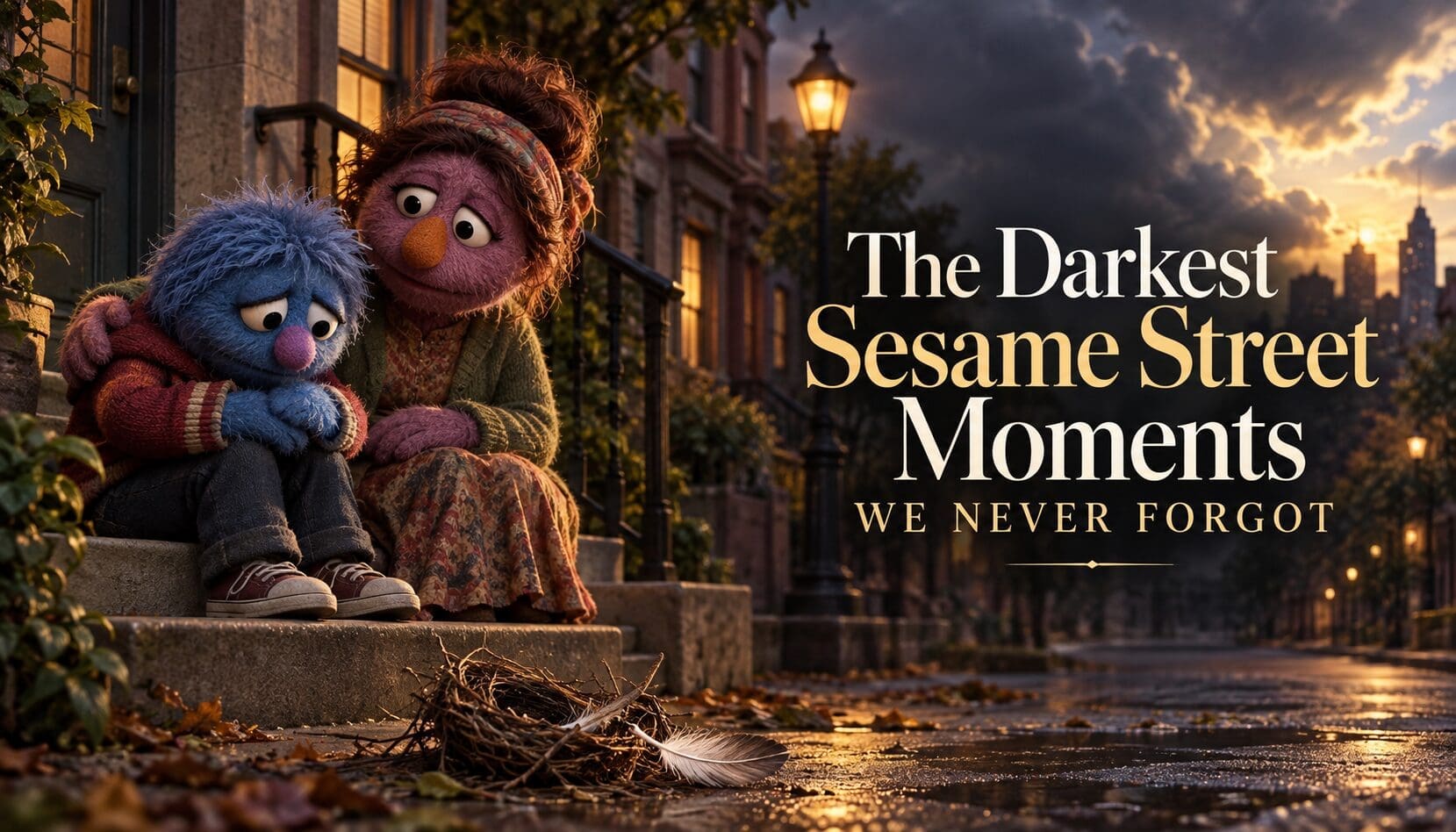
But when the storm ends, Big Bird returns to find his nest destroyed.
For young viewers, that hit hard.
Big Bird’s nest wasn’t just a pile of sticks. It was his home — one of the safest and most familiar places on the entire show.
His friends eventually come together to rebuild it.
Sesame Workshop continued using the storyline after major real-world disasters, including Hurricane Katrina and Superstorm Sandy, to help families talk with children about fear, loss and recovery.
That legacy continues today. We recently covered the newer Sesame Street storm special and its focus on helping families cope with extreme weather.
The message wasn’t that bad things never happen.
It was that you’re not alone when they do.
And Then There Was the Wicked Witch
Not every dark Sesame Street memory involved serious life lessons.
Sometimes they simply scared the pants off kids.
In 1976, Margaret Hamilton appeared on Sesame Street as the Wicked Witch of the West.
Yes.
That Wicked Witch.
The episode was supposed to teach children about fear, manners and standing up to intimidation.
Instead, many children were terrified.
Hamilton was apparently a little too good at her job.
The episode disappeared from regular rotation and eventually became one of the most famous pieces of lost Sesame Street media.
We dug much deeper into that strange piece of television history in The Lost Sesame Street Episode: Wicked Witch — Episode 847.
And honestly, putting the Wicked Witch within broomstick distance of Big Bird probably sounded much less horrifying in the writers’ room.
Old Sesame Street Could Get Seriously Weird
If you grew up watching Sesame Street in the 1970s or 1980s, there’s probably one random segment that still lives somewhere in your brain.
Maybe it was a monster.
Maybe it was an experimental animation.
Maybe it was a strange voice, face or piece of music that made five-year-old you decide television could no longer be trusted.
Early Sesame Street wasn’t afraid to experiment.
That gave us brilliant television.
It also gave us the occasional fever dream.
We’ve collected some of the strangest examples in The Strangest ’70s & ’80s Sesame Street Clips.
Ask a group of Gen X fans which Sesame Street segment frightened them and you’ll probably get ten completely different answers.
Every one of them will swear theirs was the worst.
Sesame Street Never Stopped Tackling Hard Subjects
Over the years, the show’s difficult conversations expanded far beyond what happened on the television program itself.
Sesame Workshop has created characters and resources dealing with homelessness, parental addiction, foster care, incarceration, grief, military deployment and other situations young children actually experience.
Its South African production Takalani Sesame even introduced Kami, an HIV-positive Muppet created to help children understand HIV/AIDS and challenge stigma surrounding the disease.
Modern Sesame Street continues that tradition by putting more emphasis on emotional health, resilience and helping children understand complicated families and communities. We looked at that evolution in Modern Sesame Street: Mental Health, Diversity & Inclusion.
Which brings us to what made these darker moments matter.
Sesame Street Didn’t Pretend Everything Was Perfect
Maybe these moments stayed with us because Sesame Street didn’t always give kids the easy answer.
Mr. Hooper really was gone.
Big Bird really did lose his nest.
Some families really do break apart.
Sometimes children are frightened, confused or dealing with situations they don’t understand.
The show acknowledged that.
But almost every difficult story eventually came back to the same idea:
You don’t have to face scary things alone.
That’s a surprisingly powerful legacy for a show most of us also remember for Cookie Monster destroying baked goods and Ernie slowly driving Bert insane.
And maybe that’s why these episodes stayed with us long after we forgot most of the alphabet lessons.
What Sesame Street moment scared you, made you cry or stayed in your head for years?