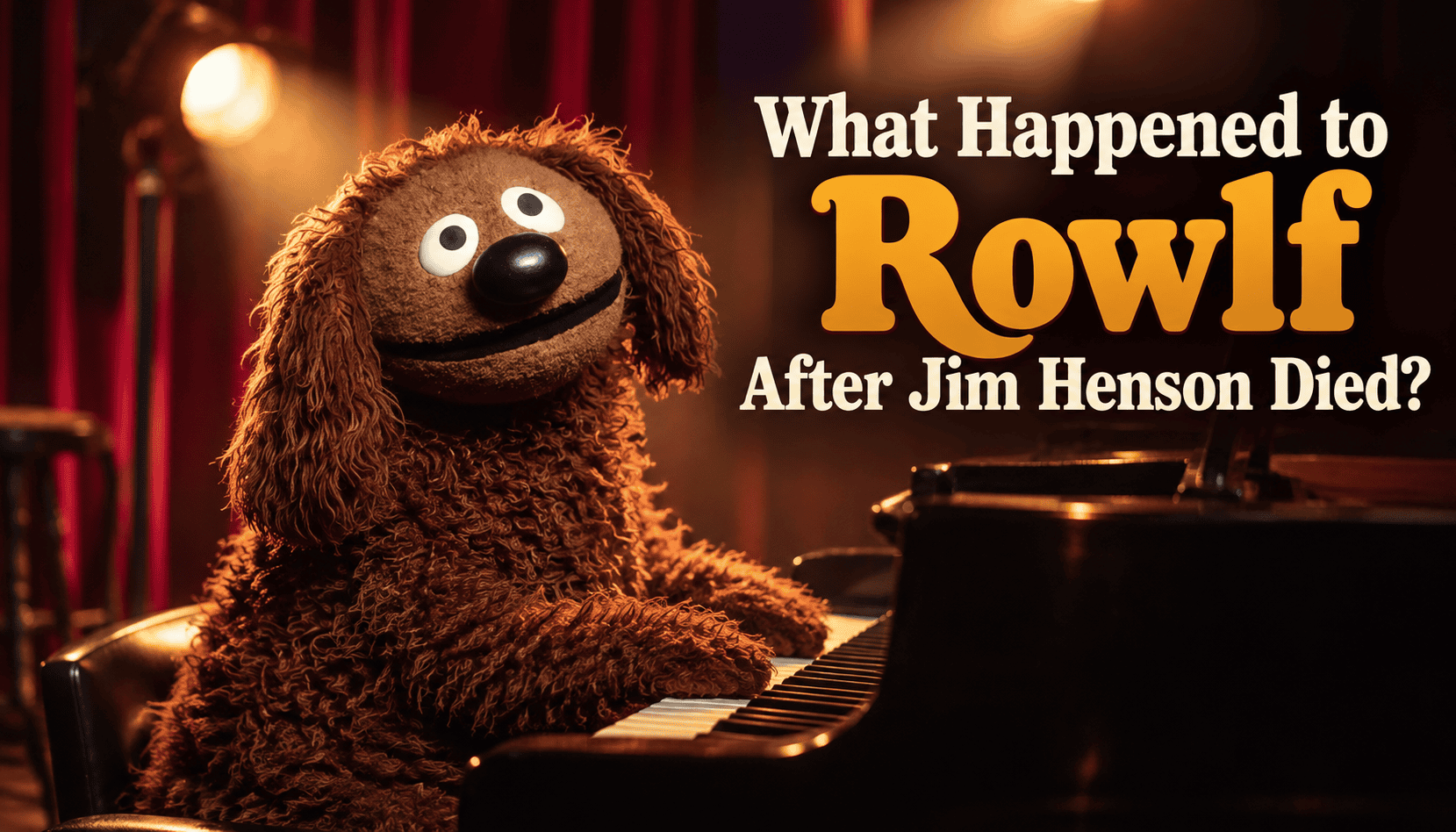
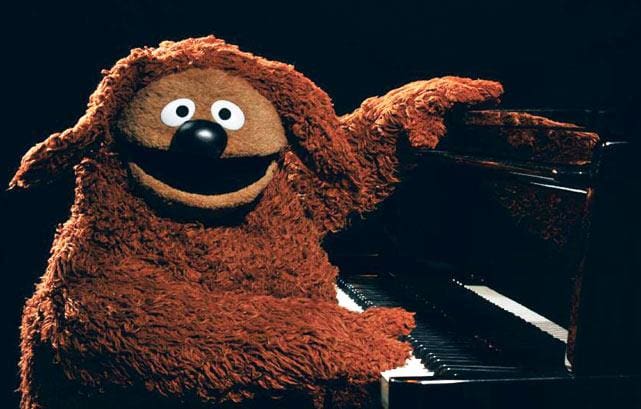
Rowlf the Dog was never the loudest Muppet in the room.
He didn’t karate-chop anyone. He didn’t blow up the theater. He didn’t fire himself out of a cannon.
Usually, Rowlf was perfectly happy sitting behind a piano, delivering a dry joke and watching the madness happen around him.
But when Jim Henson died in 1990, something unusual happened to Rowlf.
The dog who had been one of Henson’s oldest and most personal characters almost stopped speaking.
And for years, fans wondered if Rowlf would ever truly return.
Rowlf Was One of Jim Henson’s First Stars
Long before Kermit was running The Muppet Show, Rowlf was already famous.
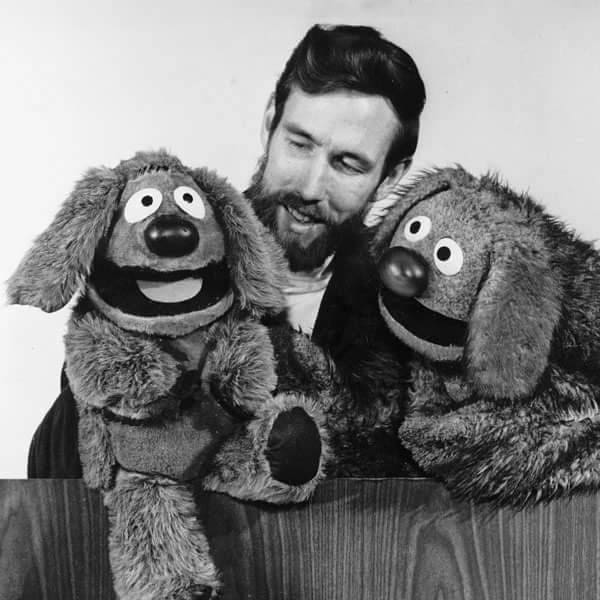
Rowlf was created in 1962 for Purina Dog Chow commercials. Jim Henson designed and performed the character, while legendary Muppet builder Don Sahlin constructed the original puppet. The Jim Henson Company archives note that Henson’s natural comfort and connection with Rowlf was obvious almost immediately.
We’ve already explored that beginning on Muppet Madness in Rowlf’s unusual Dog Chow television debut.
But dog food was only the beginning.
In 1963, Rowlf became a regular on The Jimmy Dean Show. It was a huge breakthrough. The Jim Henson Company describes Rowlf as Muppets, Inc.’s first star, and his chemistry with Jimmy Dean helped prove that a Muppet could work as a genuine television personality alongside a human performer.
That strange but wonderful partnership has its own story in our look back at Jimmy Dean and his famous Muppet dog.
By the time The Muppet Show arrived in 1976, Rowlf wasn’t some new supporting character.
He was an old pro.
Rowlf Was Different From Kermit
Kermit became Jim Henson’s most famous character, but Rowlf had something different.
He felt remarkably relaxed.
Rowlf could be sarcastic without being cruel. He could be sentimental without becoming sappy. He rarely seemed worried about anything.
While Kermit was usually trying to keep the theater from collapsing around him, Rowlf often looked like he’d already accepted that the theater was going to collapse and decided to play another song.
That personality wasn’t accidental.
The Henson archives specifically describe the strong connection Jim had with Rowlf from the character’s earliest days. Rowlf gave Henson another side of himself to perform: older, dryer, musical and wonderfully laid-back.
You can see plenty of that classic Rowlf in our look back at the beginnings of The Muppet Show.
And that closeness between performer and character would make what happened next particularly difficult.
Jim Henson Died Suddenly in 1990
Jim Henson died on May 16, 1990, at only 53 years old.
His death shocked not only fans but the performers and collaborators who had spent years working beside him. The Muppet team suddenly faced a question nobody wanted to answer:
Could the Muppets continue without Jim?
They ultimately decided they could.
Kermit was eventually entrusted to longtime Muppet performer Steve Whitmire. Whitmire’s first performance as Kermit came during the emotional 1990 television special The Muppets Celebrate Jim Henson. Whitmire later described how difficult that first performance was with Henson’s family and fellow performers watching.
Rowlf was different.
Nobody immediately stepped forward and said, “I’ll be Rowlf now.”
So Rowlf became quiet.
Rowlf Didn’t Completely Disappear
There is a long-running belief among fans that Rowlf was permanently retired after Jim Henson died.
That isn’t quite what happened.
Rowlf continued appearing. He simply appeared silently or with very little vocal performance.
He can be spotted playing piano during Fozziwig’s party in 1992’s The Muppet Christmas Carol. He later appears in Muppet Treasure Island in 1996.
That distinction matters.
The Muppets hadn’t forgotten Rowlf.
They hadn’t killed him off.
They hadn’t sent him to a nice farm upstate with unlimited piano access.
They just weren’t ready to hand one of Jim’s most personal characters to someone else.
And considering how closely the character had been associated with Henson for nearly three decades, there was no reason to rush it.
Then Bill Barretta Came Along
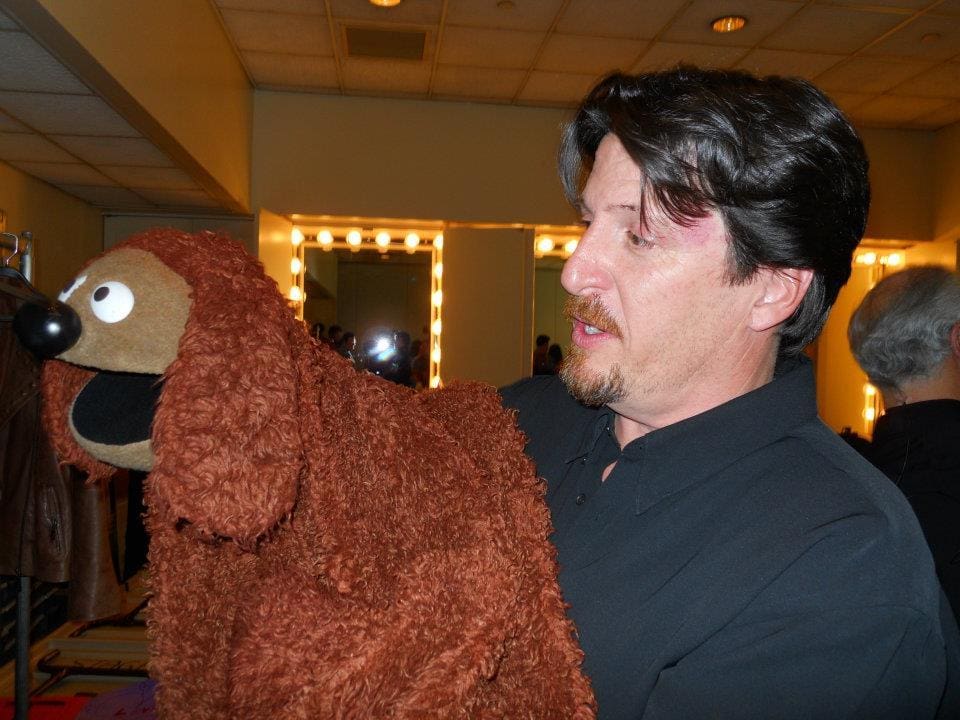
The eventual answer was Bill Barretta.
Barretta had joined the Henson world after Jim’s death and would go on to create characters including Pepe the King Prawn and Bobo the Bear.
He was also a huge admirer of Henson’s performances.
Barretta later explained that Brian Henson asked him to perform Rowlf after discussing the idea with the Henson family. Barretta understood immediately that taking over a Jim Henson character wasn’t simply a matter of copying a voice.
That was especially true with Rowlf.
Barretta has said that Jim’s characters came from Jim himself and that his goal was to preserve their spirit and integrity rather than pretend they had suddenly become his own creations.
That’s probably why Rowlf’s return worked.
It wasn’t treated like replacing an actor in a sitcom.
It was gradual.
In 1996, Rowlf Found His Voice Again
With Barretta taking over the character, Rowlf slowly began speaking again.
One of the first important moments came with Muppets Tonight in 1996. During a musical number, Rowlf finally had a brief vocal moment after years of mostly silent appearances.
It wasn’t a giant comeback speech.
There was no dramatic spotlight.
There was no orchestra swelling while Rowlf announced:
“I HAVE RETURNED.”
That wouldn’t have been very Rowlf anyway.
Instead, the character simply started becoming part of the Muppet world again.
Over time, Barretta became Rowlf’s regular performer. Rowlf returned to songs, sketches, television appearances and movies.
The old dog was back behind the piano.
Jim’s Rowlf Even Returned After Jim Was Gone
There’s another beautiful piece of Rowlf’s post-1990 story.
In 1993, the album Ol’ Brown Ears Is Back was released.
It featured Jim Henson himself performing Rowlf.
The recordings had actually been made years earlier, in 1984, but the album wasn’t released until three years after Henson’s death. Contemporary reviews specifically noted that listeners were once again hearing Henson’s unmistakable performance of his old piano-playing dog.
That meant something unusual happened during Rowlf’s quiet years.
While the modern character was barely speaking on screen, fans suddenly received an entire album filled with Jim’s Rowlf.
In a way, the original voice got one last encore.
Rowlf Never Really Needed a Comeback
That’s what makes Rowlf’s story different from most recast characters.
He didn’t disappear because audiences stopped liking him.
He wasn’t written out because writers ran out of ideas.
And he wasn’t dramatically rebooted with a new personality.
Everyone simply seemed to understand that Rowlf needed time.
Eventually Bill Barretta found a way to carry the character forward while respecting what Jim Henson had created.
Rowlf could speak again.
He could play the piano again.
He could deliver another terrible dog joke.
But the connection to Jim never completely disappeared.
And perhaps that’s appropriate.
Jim Henson created hundreds of memorable characters and helped build an entertainment legacy that continues decades after his death. We recently looked at that continuing influence while celebrating Jim Henson’s 90th birthday and the performers carrying his legacy forward.
Rowlf may be one of the clearest examples of how that legacy works.
Someone else can hold the puppet.
Someone else can provide the voice.
But somewhere underneath the brown fur, floppy ears and piano keys, there will always be a little bit of Jim.